Chapter 10 · Life & Times
Pacifism, Rights & Zionism
Einstein refused to be only a scientist. He used his unmatched fame as a moral megaphone — against war, against racism, against tyranny — and it made him as many enemies as admirers. To the end he insisted that a thinking person had a duty to speak.
A pacifist — with one terrible exception
Einstein was a committed pacifist. During the First World War he was one of the very few German intellectuals to oppose it openly. In the 1920s he campaigned for disarmament and famously said he would refuse all war service.
But the rise of Hitler forced an agonising reversal. Confronted with a regime he believed could only be stopped by force, Einstein concluded that, against Nazi Germany, military resistance was a tragic necessity. After the war, horrified by the atomic bomb, he returned to campaigning for peace and world government with renewed urgency.
Einstein against American racism
Arriving in America, Einstein was appalled by its treatment of Black citizens. He spoke out when few public figures of his stature would. He joined the NAACP, corresponded with W. E. B. Du Bois, and formed a warm friendship with the singer and activist Paul Robeson.
In 1946 he travelled to the historically Black Lincoln University in Pennsylvania to receive an honorary degree and teach a class on relativity, calling segregation "a disease of white people" that he did not intend to be quiet about. When the celebrated contralto Marian Anderson was refused a hotel room in Princeton, Einstein invited her to stay in his home — and they remained friends for life.
There is a separation of colored people from white people in the United States. That separation is not a disease of colored people. It is a disease of white people. I do not intend to be quiet about it.Albert EinsteinLincoln University, 1946 — as reported in the Baltimore Afro-American, 11 May 1946; no transcript of the speech survives
- Wikipedia: Albert Einstein — "Civil rights".
- Fred Jerome & Rodger Taylor, Einstein on Race and Racism (2005).
- Quotation as reported in the Baltimore Afro-American, 11 May 1946, via wist.info.
Zionism — and the presidency he declined
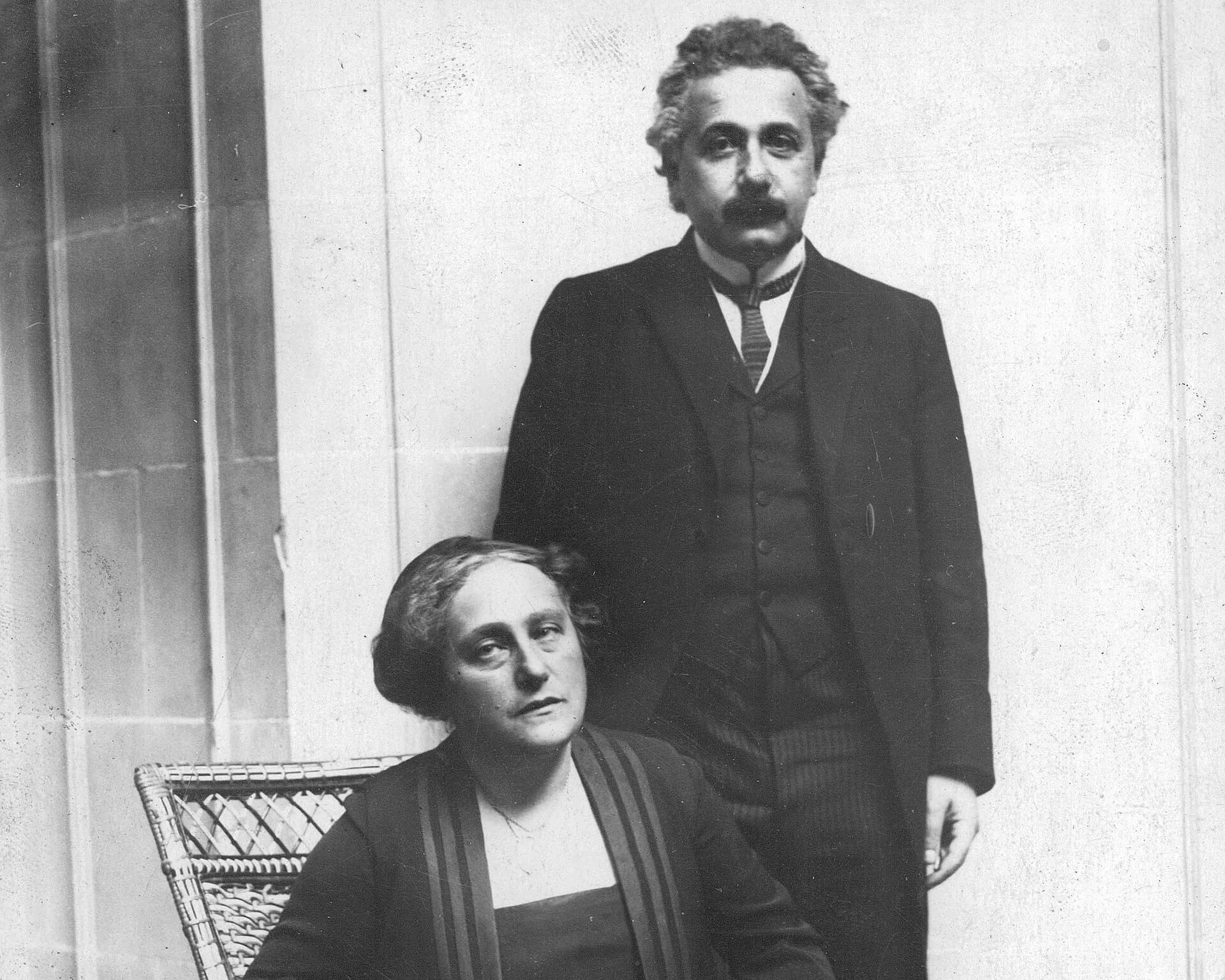
As a Jew who had felt the sting of antisemitism, Einstein was a passionate supporter of a Jewish homeland and a founding champion of the Hebrew University of Jerusalem, to which he ultimately bequeathed his papers. Yet his Zionism was distinctive: he favoured a binational solution and peaceful coexistence with Arabs, and warned against narrow nationalism.
In 1952, after the death of Israel's first president Chaim Weizmann, Einstein was formally offered the presidency of Israel. He was deeply moved — and declined. "I am deeply moved," he wrote, but he lacked "both the natural aptitude and the experience to deal properly with people."
In 1949 he set out his political philosophy in the essay "Why Socialism?", arguing that unchecked capitalism bred inequality and that society should be organised for human welfare. It remains one of his most discussed non-scientific writings.
- Wikipedia: Albert Einstein — "Zionism" and "Presidency of Israel".
- Einstein, "Why Socialism?", Monthly Review (1949).
- On the FBI file: Wikipedia: Political views of Albert Einstein (1,427 pages released).