Chapter 12 · Life & Times
Later Years & the Final Quest
The second half of Einstein's scientific life was, by his own measure, a noble failure. While younger physicists built the triumphant edifice of quantum mechanics, he walked a lonelier road — chasing a single theory that would unite all of nature. He never found it. But the search defined his final decades as surely as relativity had defined his youth.
The dream of a unified field
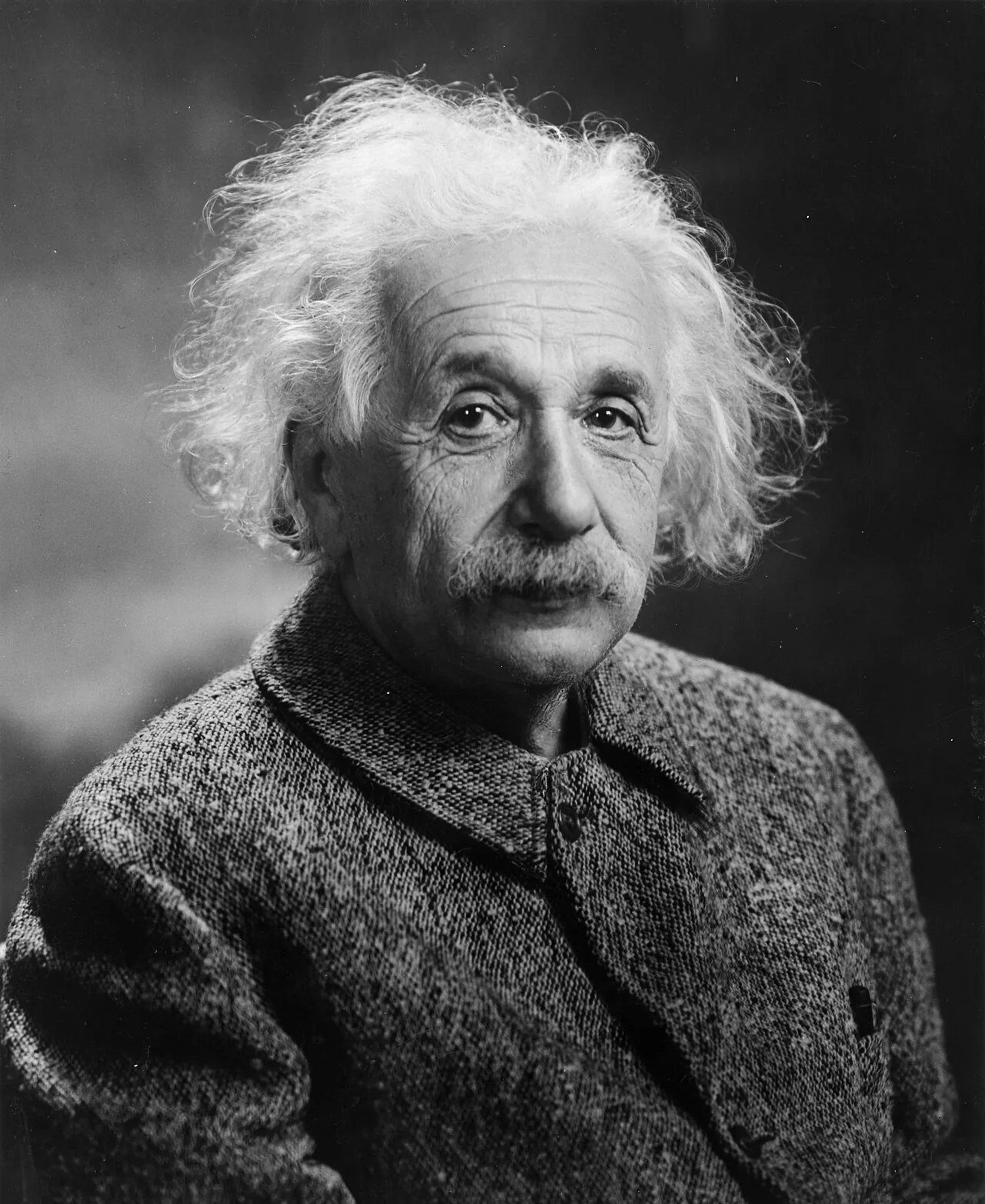
Einstein spent roughly his last thirty years seeking a unified field theory — a single framework that would merge gravity and electromagnetism (and, he hoped, explain quantum phenomena) into one elegant set of equations. It was a magnificent ambition, decades ahead of its time.
But he worked increasingly alone. He rejected the probabilistic heart of quantum mechanics, and so set himself against the mainstream of physics. Colleagues respected him immensely while quietly believing he was on the wrong track. He knew it, and pressed on anyway, guided by his faith in mathematical beauty.
- Wikipedia: Unified field theory.
- Albert Einstein — "Later years".
The sage of Mercer Street
Einstein became a beloved fixture of Princeton — shuffling to the Institute in a rumpled sweater, declining honours, answering children's letters about science and homework with patience and warmth. He took daily walks with the brilliant, troubled logician Kurt Gödel; the two outsiders, refugees from Europe, found in each other a rare meeting of minds.
In 1952 came the extraordinary offer of the presidency of Israel, which he gently declined. He remained intellectually active and politically outspoken to the very end, signing the anti-nuclear Russell–Einstein Manifesto just a week before he died.
- Wikipedia: Kurt Gödel — friendship with Einstein.
How he thought when he was stuck
Three things from Einstein’s life beyond physics – and how much of each is documented. Choose a topic.
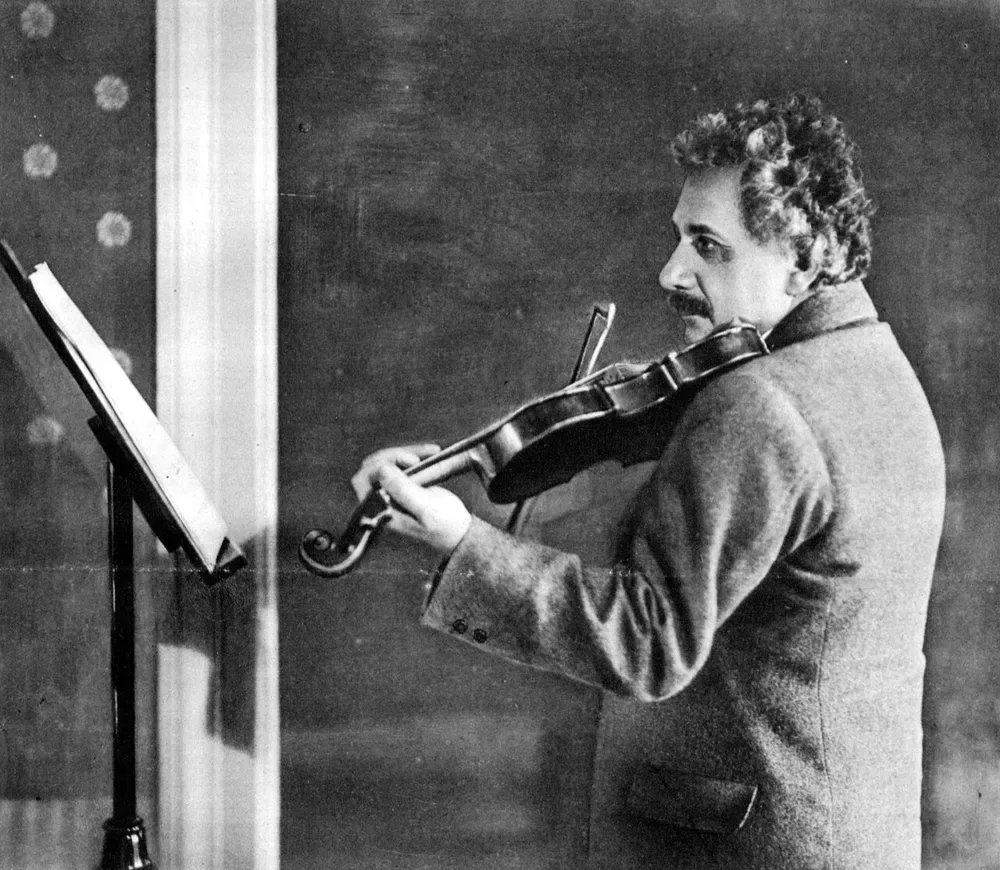
The violin “Lina”
Documented
At five Einstein started violin lessons because his mother wanted him to. He only came to enjoy them when he discovered Mozart’s violin sonatas – at 13, according to English Wikipedia; German Wikipedia says twelve. From then on music stayed with him: in Bern, Zurich and Berlin he played chamber music, in Berlin also with Max Planck. Mozart remained his favourite, and he preferred Bach to Beethoven. He called every one of his violins “Lina”.
His wife Elsa said that music helped him when he was thinking about his theories: he would go to his study, come back, strike a few chords on the piano, jot something down and return to his study.
Sources: en.wikipedia: Albert Einstein · de.wikipedia: Albert Einstein · University of Cambridge: Einstein’s violin identified … (07.10.2025) · National Geographic: M. Waldrop, Inside Einstein’s Love Affair With ‘Lina’ – His Cherished Violin (03.02.2017)
A death on his own terms
In April 1955, an aneurysm that had been surgically reinforced years earlier began to leak (he fell ill on 13 April and entered hospital on the 15th). Doctors offered an operation that might prolong his life. Einstein refused.
I want to go when I want. It is tasteless to prolong life artificially. I have done my share; it is time to go. I will do it elegantly.Albert Einsteindeclining surgery, April 1955 — as reported by his doctors and biographers
He died in the early hours of 18 April 1955 at Princeton Hospital, aged 76. He was working to the last: beside his bed lay pages of equations for the unified theory he never completed, and a draft of a speech he would never give. His final words, spoken in German to a night nurse who did not understand them, are lost to history.
What he left behind — and the strange afterlife of his own brain — is the subject of the final chapter.
- Wikipedia: Albert Einstein – Death.
- The Daily Princetonian: Einstein dies (18 April 1955); Cohen & Graver, Surg Gynecol Obstet 170 (1990), 455–458 (the surgery quote).
- Walter Isaacson, Einstein: His Life and Universe (2007), final chapters.