Chapter 09 · Life & Times
Exile & Princeton
In 1932 Einstein was the pride of German science, a professor in Berlin and the most celebrated intellectual in the world. A year later he was a hunted refugee who would never set foot in Germany again. The story of his exile is the story of the twentieth century in miniature.
From Bern to Berlin
After the patent office, Einstein's career climbed fast: professorships in Zurich, Prague, and the ETH, and in 1914 a prestigious move to Berlin — a salaried seat in the Prussian Academy of Sciences and a chair at the university with no teaching duties; in 1917 he also became director of the new Kaiser Wilhelm Institute for Physics. It was here, during the First World War, that he completed general relativity — and, as an outspoken pacifist, refused to sign the notorious pro-war manifesto that most German intellectuals endorsed.
- Wikipedia: Albert Einstein — "Berlin years".
- Max-Planck-Gesellschaft: Einstein in Berlin.
1933: the door slams shut
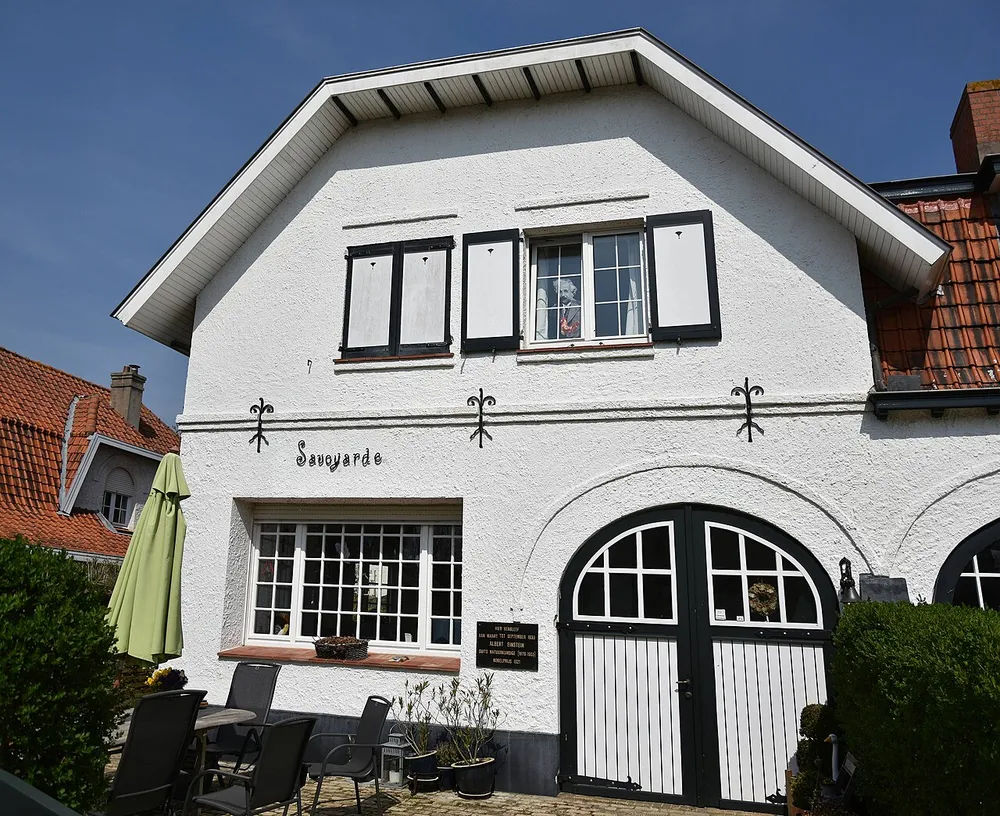
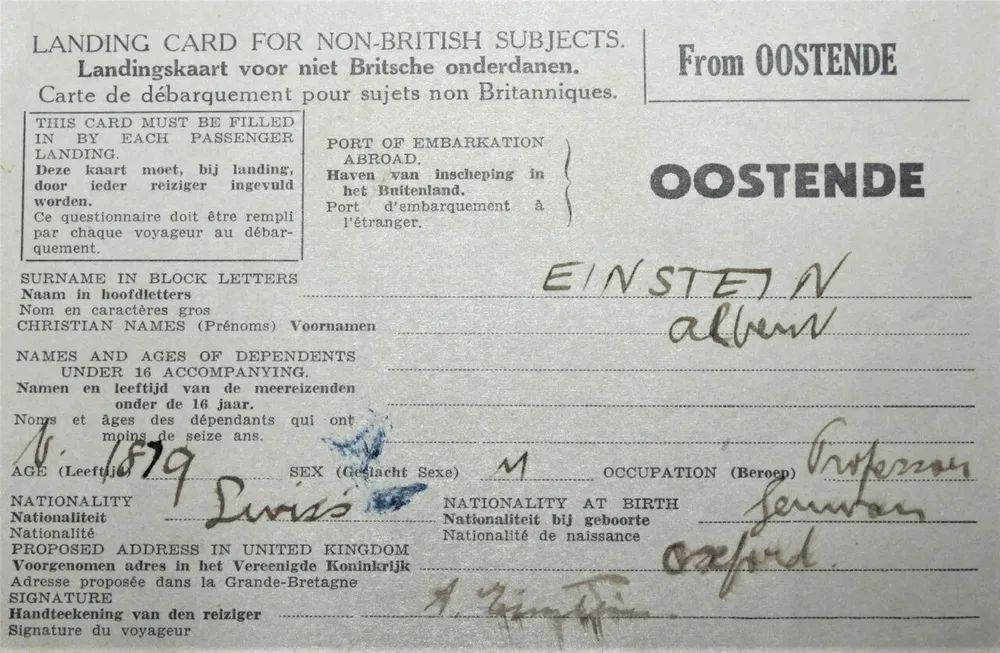
As a Jew and a famous liberal pacifist, Einstein was a natural target for the rising Nazi movement. His relativity was denounced as "Jewish physics." When Hitler came to power in January 1933, Einstein was visiting the United States. He decided that spring not to return: on 28 March 1933 he landed in Antwerp and handed in his German passport straight away.
The consequences came quickly. He renounced his German citizenship and resigned from the Prussian Academy. The Nazis raided his beloved summer house in Caputh, seized his bank accounts, and publicly burned his books. A Nazi publication listed enemies of the regime with his photograph and the caption "not yet hanged"; newspapers reported a bounty on his head, in some accounts as much as $5,000. Einstein, briefly, had to be guarded.
I must confess that the degree of their brutality and cowardice came as something of a surprise.Albert Einsteinletter to Max Born, 30 May 1933 (translated from German)
- Wikipedia: Albert Einstein — "Emigration".
- Wikipedia: Nazi book burnings.
- Albert Einstein & Max Born, The Born–Einstein Letters (Macmillan, 1971), letter of 30 May 1933; German original: Briefwechsel 1916–1955 (Ullstein, 1986).
Spring 1933: a journey with no return
Eight stops from Pasadena to Princeton. Use “Next” and “Back” or the arrow keys.
Stop 1 of 8 · January to March 1933
Pasadena
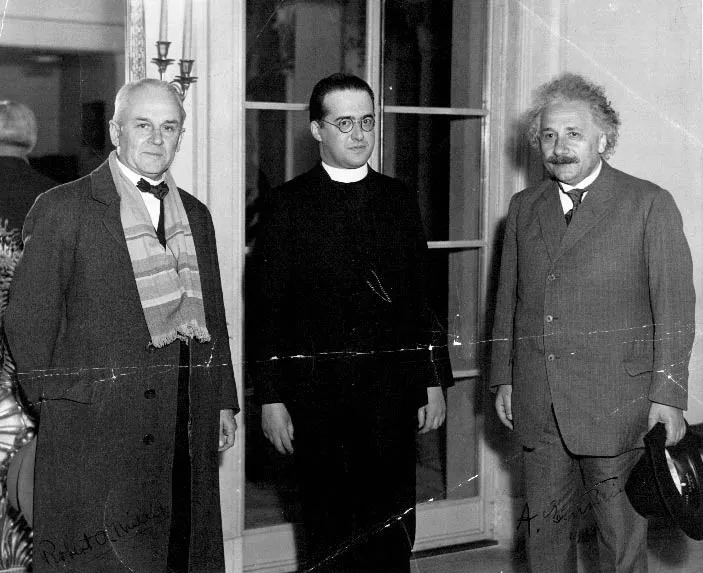
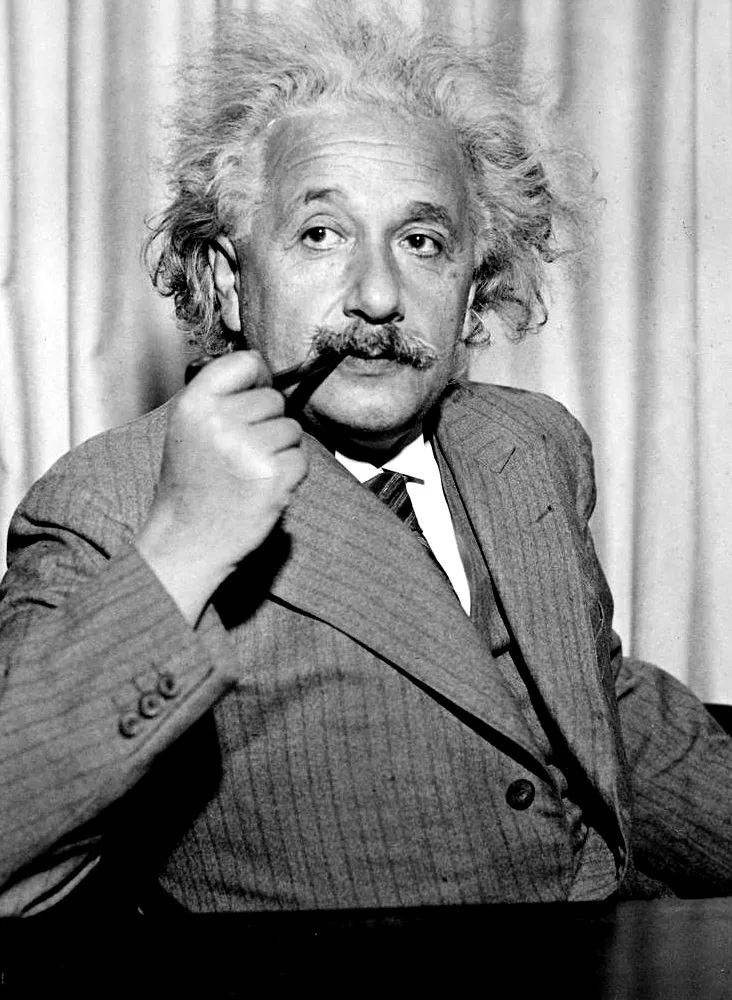
Einstein is a visiting professor at the California Institute of Technology for the third time. On 30 January 1933 Hitler becomes chancellor of Germany. On 10 March, still in the United States, Einstein gives the journalist Evelyn Seeley a statement that is printed around the world:
“As long as I have any choice in the matter, I shall live only in a country where civil liberty, tolerance, and equality of all citizens before the law prevail.”
Albert Einstein to Evelyn Seeley, 10 March 1933 (New York World-Telegram, 11 March 1933); English version as printed in Ideas and Opinions, 1954
Sources: en.wikipedia: Albert Einstein · de.wikipedia: Albert Einstein · culture.wursten.be: Einstein in 1933 (Gespräch mit Evelyn Seeley, New York World-Telegram, 11.03.1933)
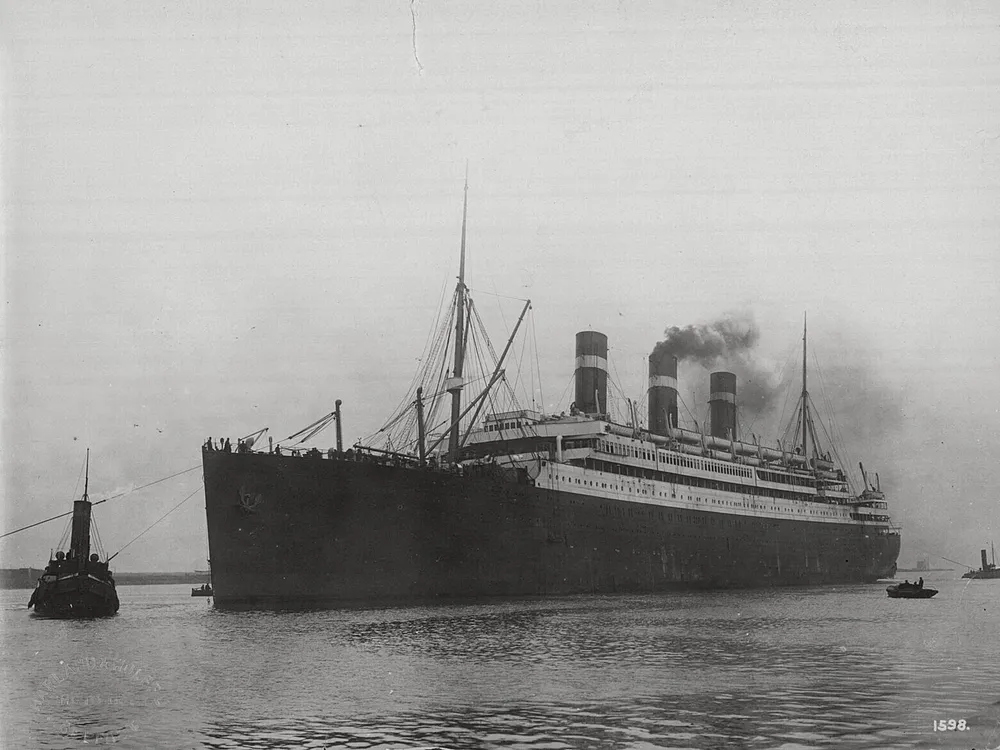
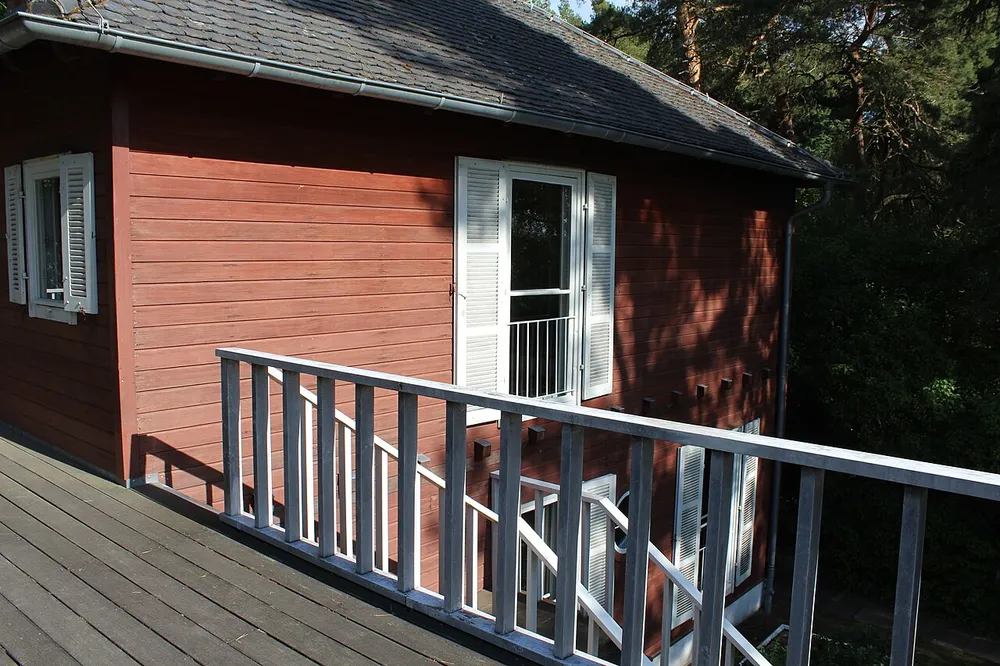
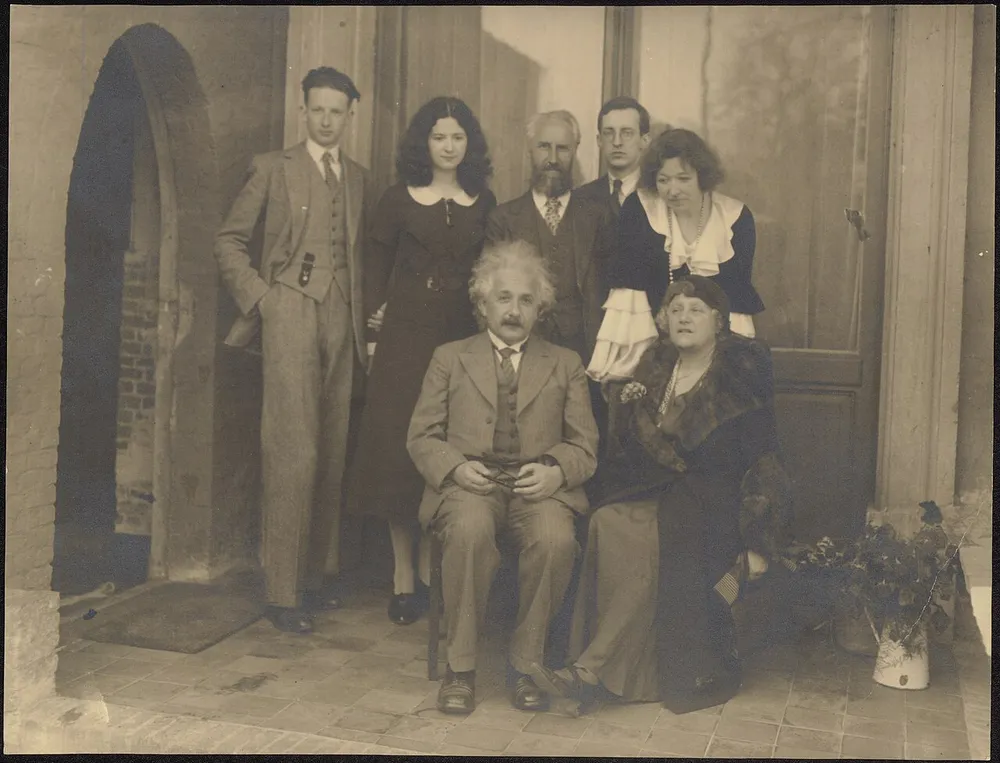
All stops
Where the sources disagree, the text says so. Base map: Natural Earth, public domain.
A new home in Princeton
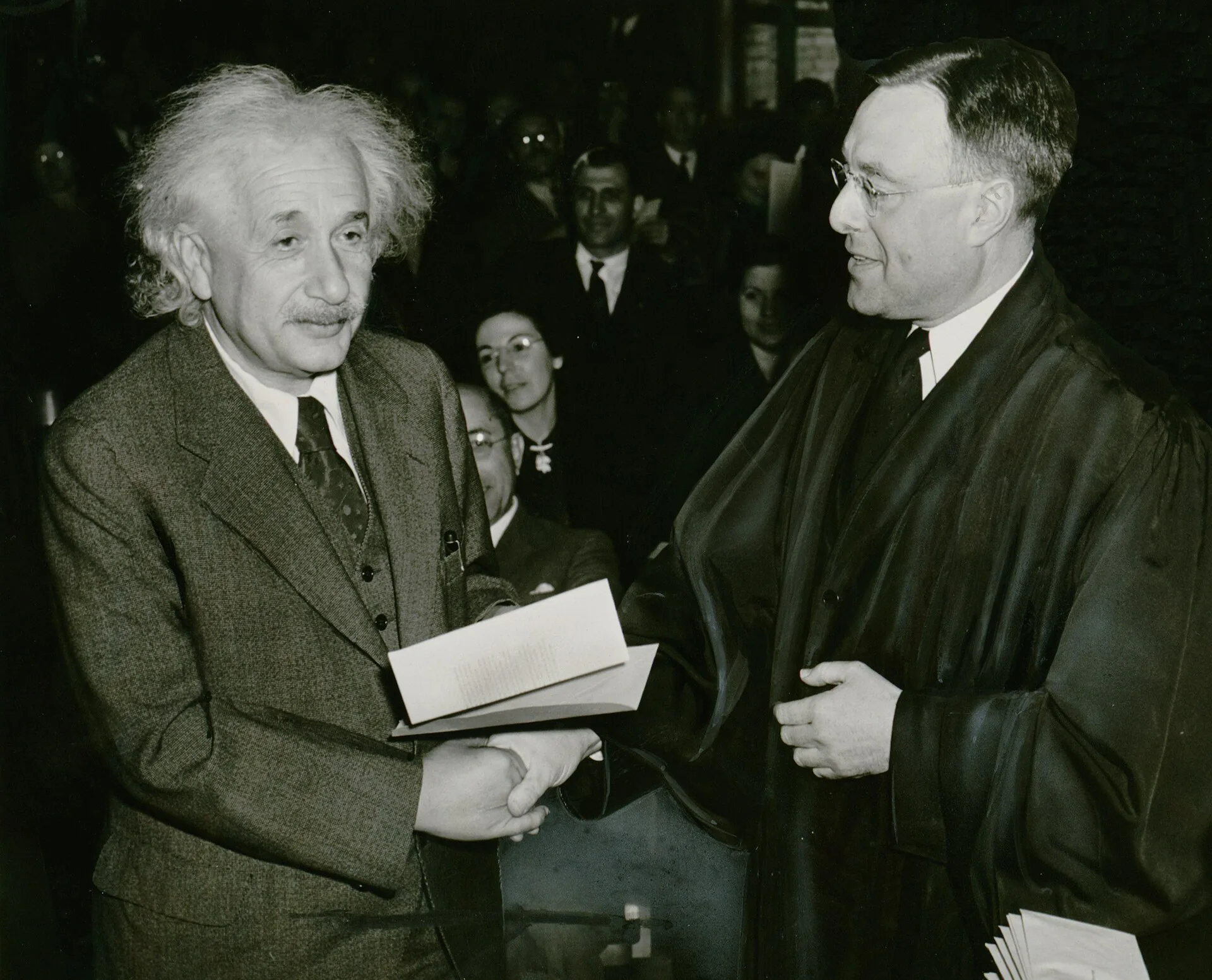
After short stays in Belgium and England, Einstein accepted a position at the newly founded Institute for Advanced Study in Princeton, New Jersey, arriving in October 1933. He would live in a modest white clapboard house on Mercer Street, walking to work, for the rest of his life.
In 1940 he became a citizen of the United States — while keeping the Swiss citizenship he had treasured since 1901. The patent clerk who had once been stateless was now a citizen of the country to whose president, just over a year earlier, he had signed the letter, written with Leo Szilárd, that helped set its atomic research in motion.
- Wikipedia: Institute for Advanced Study.
- Image: Al Aumuller / New York World-Telegram & Sun, public domain, via Wikimedia Commons.