Chapter 07 · Fame & Legacy
The Nobel Prize
Here is a quiz question that stumps almost everyone: what did Albert Einstein win the Nobel Prize for? The answer is not relativity. It is a story of scientific caution, committee doubts, and a promise made during a painful divorce.
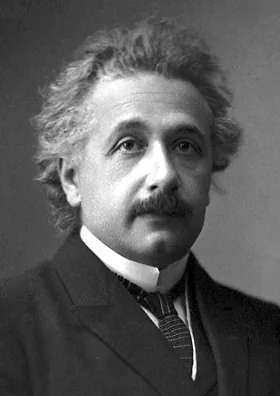
"For the photoelectric effect"
Einstein received the 1921 Nobel Prize in Physics — announced in 1922 — with a very specific citation: "for his services to Theoretical Physics, and especially for his discovery of the law of the photoelectric effect."
Relativity goes unmentioned. By the early 1920s, Einstein's name was synonymous with relativity, yet the theory was still controversial. Some on the Nobel committee — above all the ophthalmologist Allvar Gullstrand — doubted that its effects could be measured at all, and the prize notice expressly set relativity aside until it was confirmed. The committee took the safe path: it honoured his rock-solid 1905 work on the photoelectric effect instead.
A prize he wasn't there to collect
When the announcement came, Einstein was on a ship bound for Japan, in the middle of a long lecture tour. He missed the December 1922 ceremony in Stockholm entirely. The German envoy in Stockholm, Minister Rudolf Nadolny, accepted the prize on his behalf. He finally delivered his Nobel lecture in 1923, in Gothenburg — and, ever the rebel, spoke not about the photoelectric effect but about relativity.
A prize for the wrong reason — and exactly the right one
There is a beautiful irony here. The committee chose the photoelectric effect because it seemed safer than relativity. Yet that "safe" choice honoured the very work that helped launch quantum mechanics — the theory Einstein would spend the rest of his life resisting. He won his Nobel for opening a door he never wanted to walk through.