Chapter 13 · Fame & Legacy
Death, Brain & Legacy
Most scientists are remembered by other scientists. Einstein is remembered by everyone. His name means genius; his face is a global symbol; his ideas underpin technologies he never imagined. And in one bizarre final chapter, even his brain went on a journey of its own.
The strange tale of Einstein's brain
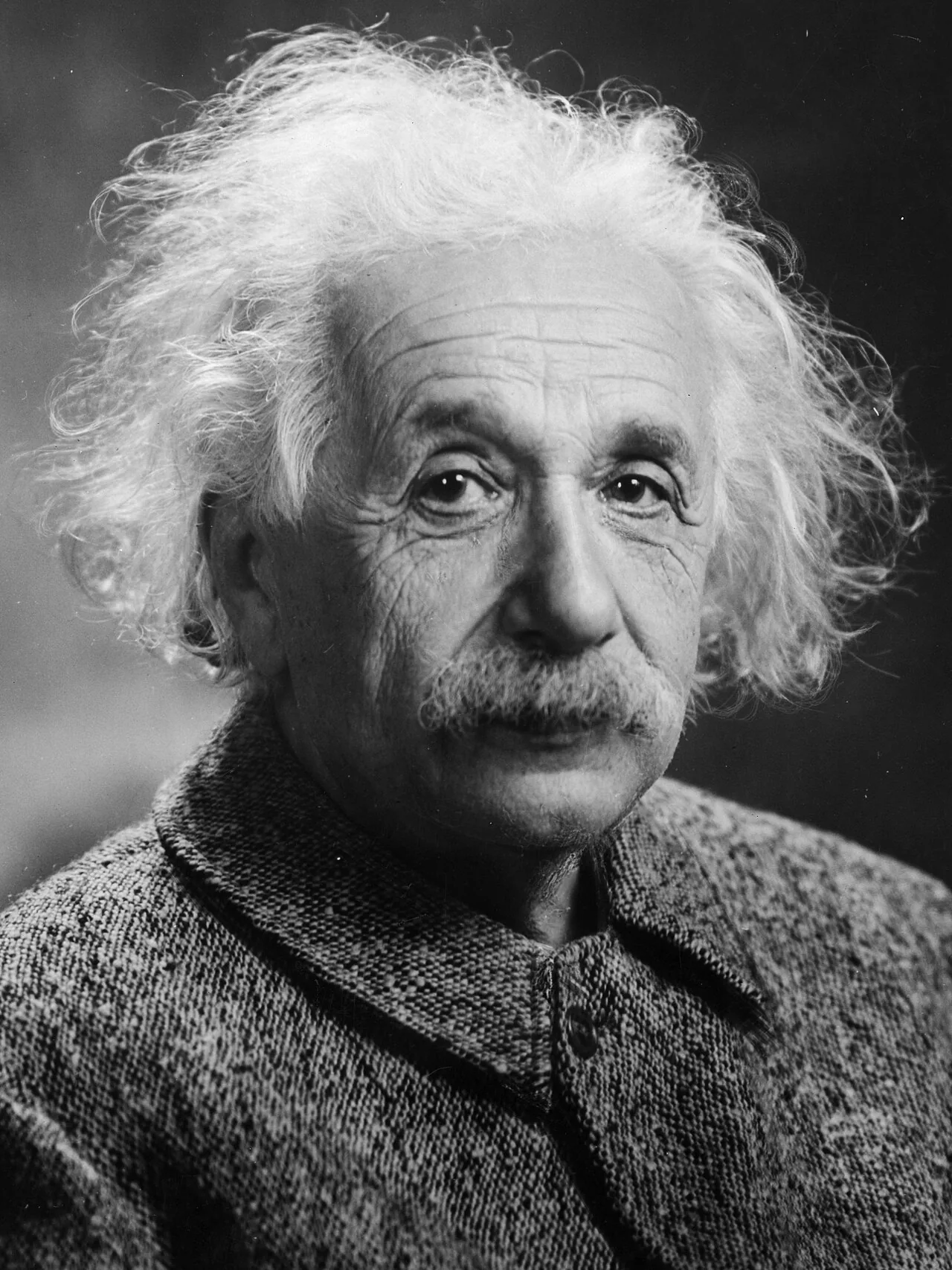
Einstein wished to be cremated quietly, with no fuss and no shrine. His body was cremated within hours and his ashes scattered at an undisclosed location. But there was a twist: during the autopsy, the pathologist Thomas Harvey removed Einstein's brain — apparently without clear permission from Einstein or his family (accounts differ on whether the family later agreed) — convinced it might hold the secret of his genius.
Harvey kept the brain, sliced into hundreds of pieces, for decades, occasionally mailing samples to researchers. Studies have suggested mild anatomical peculiarities, but no study has ever "explained" his genius. The episode is now a cautionary tale in scientific ethics as much as a biographical curiosity.
Living physics, a century on
Einstein's theories were not museum pieces. They are working tools — and they keep being spectacularly confirmed.
GPS
Satellite navigation only works because it corrects for both special and general relativity. Without these corrections, the satellite clocks would run about 38 microseconds a day fast.
Lasers & solar cells
His 1916 idea of stimulated emission underlies every laser; his light-quantum explanation of the photoelectric effect underlies solar cells and digital image sensors.
Gravitational waves
Predicted 1916, detected 2015. The LIGO observatories now "hear" black holes colliding across the universe.
Black hole image
In 2019 the Event Horizon Telescope imaged a black hole's shadow — matching what general relativity predicts.
Bose–Einstein condensates
The exotic state of matter he co-predicted in 1924 was finally made in 1995, opening a new field of ultracold physics.
Quantum technology
The "spooky" entanglement he objected to now underpins quantum computing research and quantum cryptography.
Worked out: GPS without Einstein
GPS satellites circle the Earth at an altitude of about 20,200 km, once every 11 hours and 58 minutes or so, at about 3.9 km/s. Two effects put their atomic clocks out of step with clocks on the ground. Special relativity: because the satellites move fast, their clocks – seen from Earth – run slow by about 7.2 microseconds a day. General relativity: up there gravity is weaker, and clocks run faster, by about 45.8 microseconds a day. Together, the satellite clocks gain about 38.6 microseconds a day on ground clocks. That is why their frequency standards are set slightly slow before launch: 10.22999999543 MHz instead of 10.23 MHz.
You often read that without this correction GPS would be about 11 km off after one day (the English Wikipedia gives 11.4 km; c · 38.6 µs comes to about 11.6 km). That is the light travel distance of the clock error, c · Δt – the amount by which every single range measurement to a satellite would come out too short. The real position error is more complicated: because the error would hit all satellites equally, the receiver would absorb it together with the offset of its own clock. According to the GPS expert Pratap Misra the position estimate would be unaffected – but the time would be 38 microseconds off after one day, a deal-breaker when 100-nanosecond accuracy is expected.
- Wikipedia: Error analysis for the GPS – Relativity – −7.2 µs, +45.8 µs and 38.6 µs per day, 11.4 km per day, 10.22999999543 MHz, 3,874 m/s.
- Wikipedia: Global Positioning System – altitude about 20,200 km, orbital period about 11 h 58 min.
- N. Ashby, “Relativity in the Global Positioning System”, Living Reviews in Relativity 6, 1 (2003) – net fractional frequency offset 4.4647 × 10⁻¹⁰ (≈ 38.6 µs per day).
- P. Misra, “Inside the box: GPS and relativity”, GPS World, 9 October 2023.
A name that outgrew the man
In 1999, Time magazine named Albert Einstein its "Person of the Century." Element 99 is einsteinium. His birthday, 14 March, falls on Pi Day. His likeness sells everything from posters to plush toys. "Einstein" is the word we reach for whenever we mean the smartest person in the room.
The important thing is not to stop questioning. Curiosity has its own reason for existing.Albert Einsteininterview, 1955
Perhaps that is the truest legacy. Not a formula or a prize, but a way of being in the world: relentlessly curious, gleefully irreverent, unwilling to accept that anything was beyond understanding. Einstein taught a whole century that the universe is knowable — and that wondering about it is one of the finest things a human being can do.
- Wikipedia: Albert Einstein — "Legacy".
- Einsteinium; Time, "Person of the Century" (1999).