Reference · Illustrated timeline
A Life in Time
Seventy-six years that bent the course of science and history — told in five acts, from a curious child in Ulm to a global icon whose predictions are still coming true decades after his death.
The places of his life, on the map
Ulm, Munich, Pavia, Aarau, Zurich three times, Bern, Prague, Berlin, Caputh, De Haan, Princeton: Einstein moved often — mostly for work, in the end as a refugee. The map shows where he lived, when, and what he did there.
Act I · 1879–1900
Beginnings
A curious child in southern Germany, a magnetic compass that felt like magic, and a rebellious exit from school.
-
1879
Born in Ulm
Albert Einstein is born on 14 March to Hermann and Pauline Einstein.
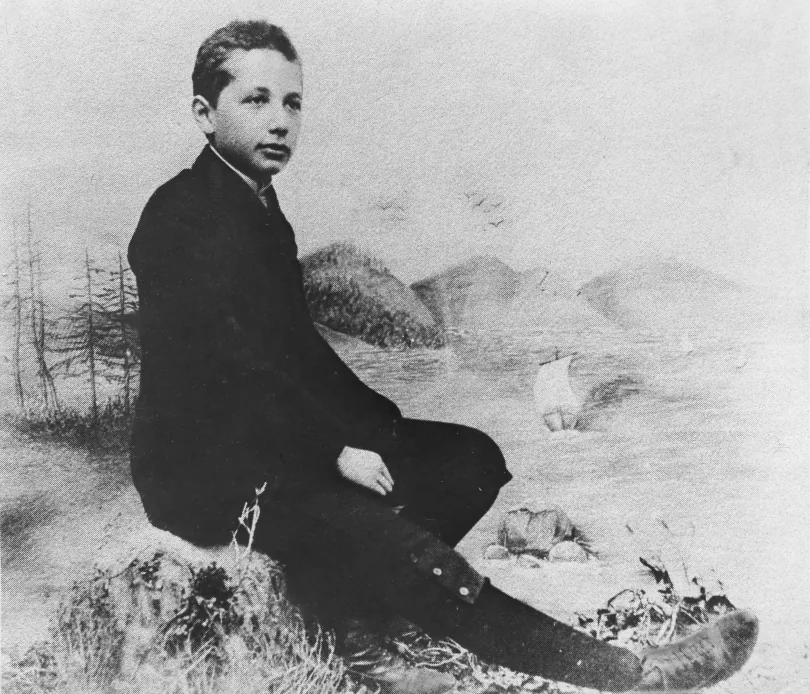
Image: Unknown author. Public domain, via Wikimedia Commons (Source) -
1880
Move to Munich
The family relocates to Munich, where his father and uncle run an electrical-engineering firm.
-
1894–95
Italy & a bold exit
The family business fails. Albert leaves his Munich school and later renounces German citizenship to avoid military service.
-
1896
Aarau & the Polytechnic
He passes the Swiss Matura with top marks in the sciences and enrols at the Zurich Polytechnic.
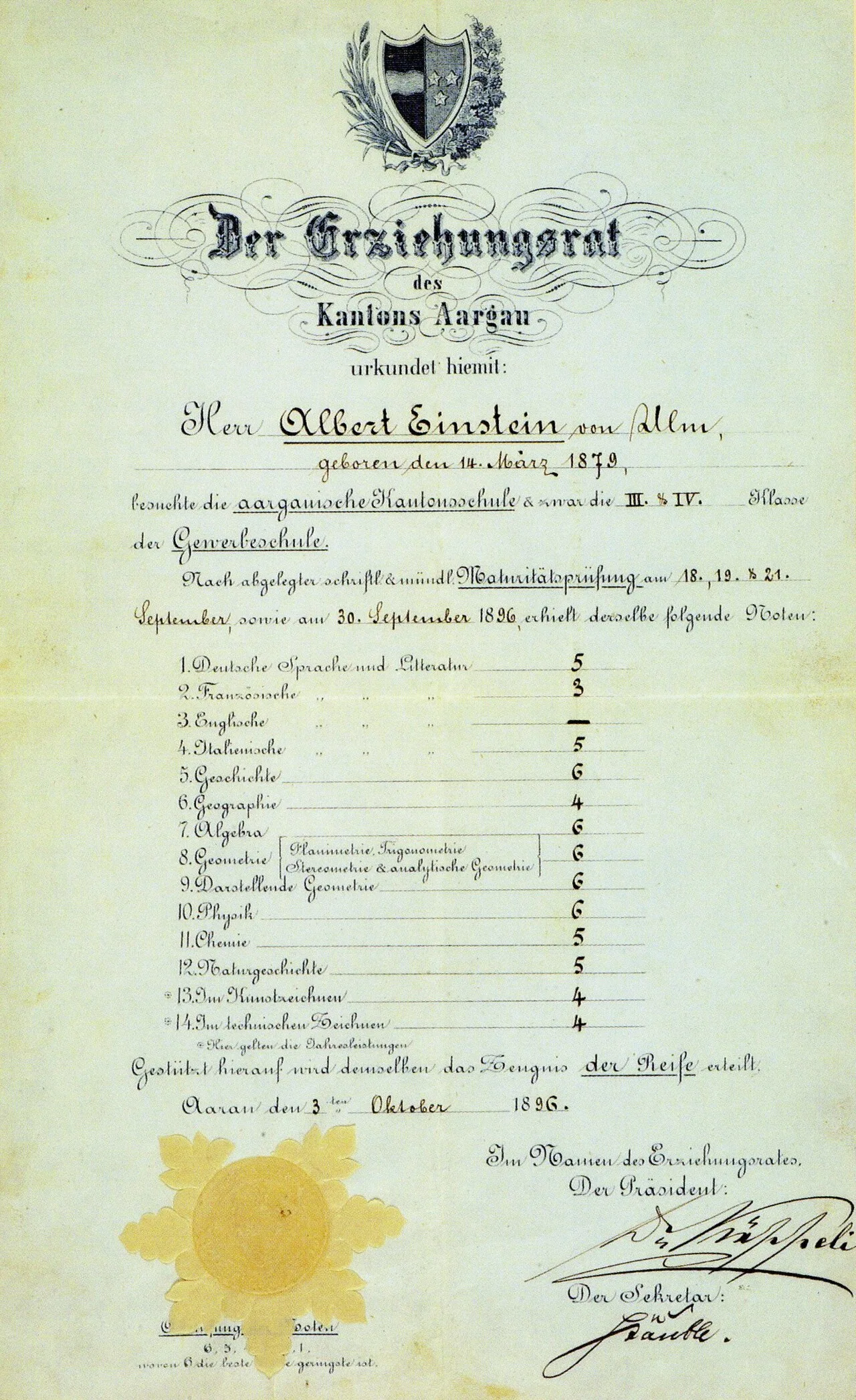
Image: Authorities of the Canton of Aargau, Switzerland. Public domain, via Wikimedia Commons (Source) -
1900
Graduation
Einstein graduates — then struggles for two years to find an academic position.
Act II · 1900–1915
The Miracle Years
From an obscure patent clerk to the architect of a new physics.
-
1902
The patent office
He becomes a technical expert at the Swiss Federal Patent Office in Bern.
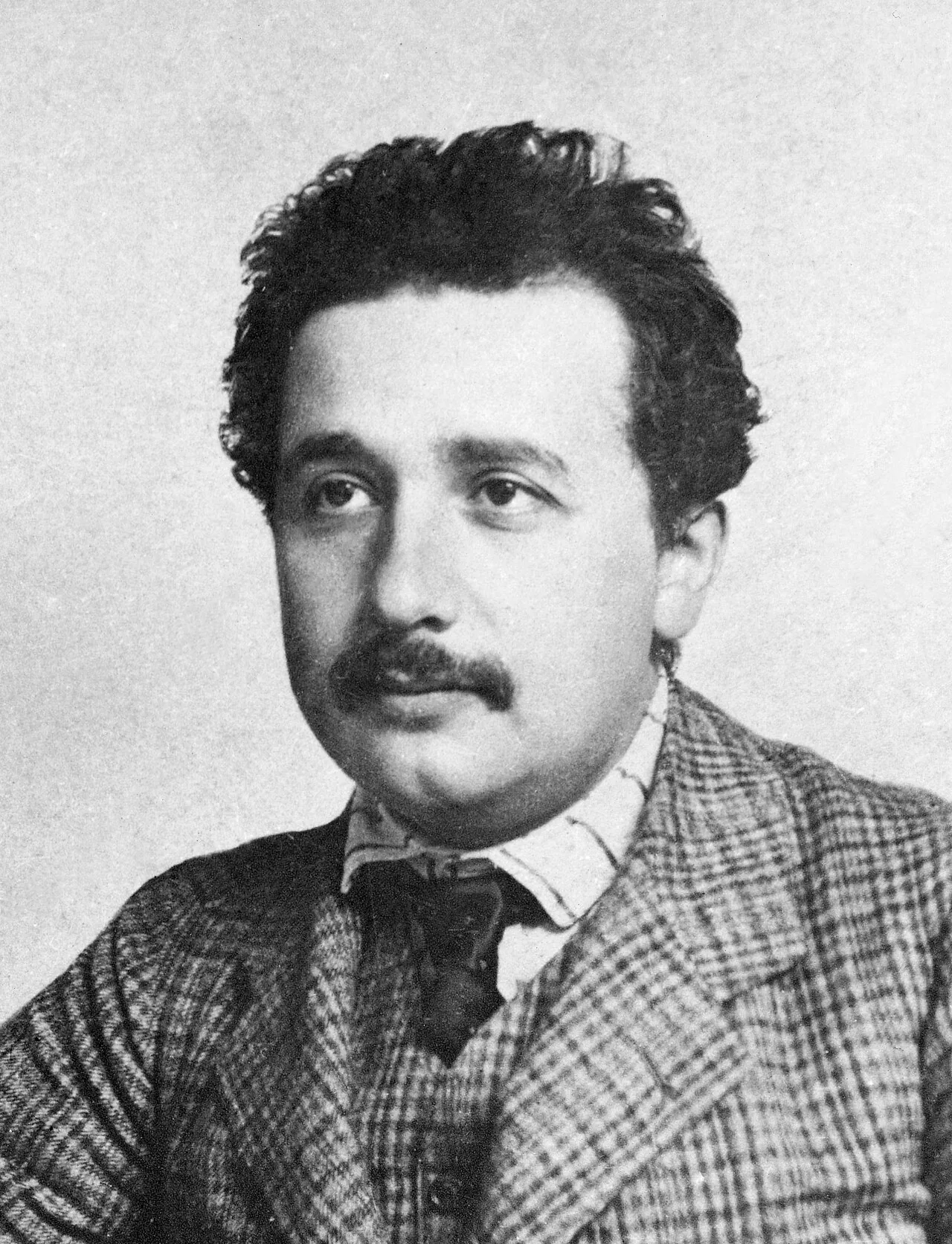
Image: Lucien Chavan. Public domain, via Wikimedia Commons (Source) -
1903
Marries Mileva Marić
Albert marries fellow physicist Mileva Marić.
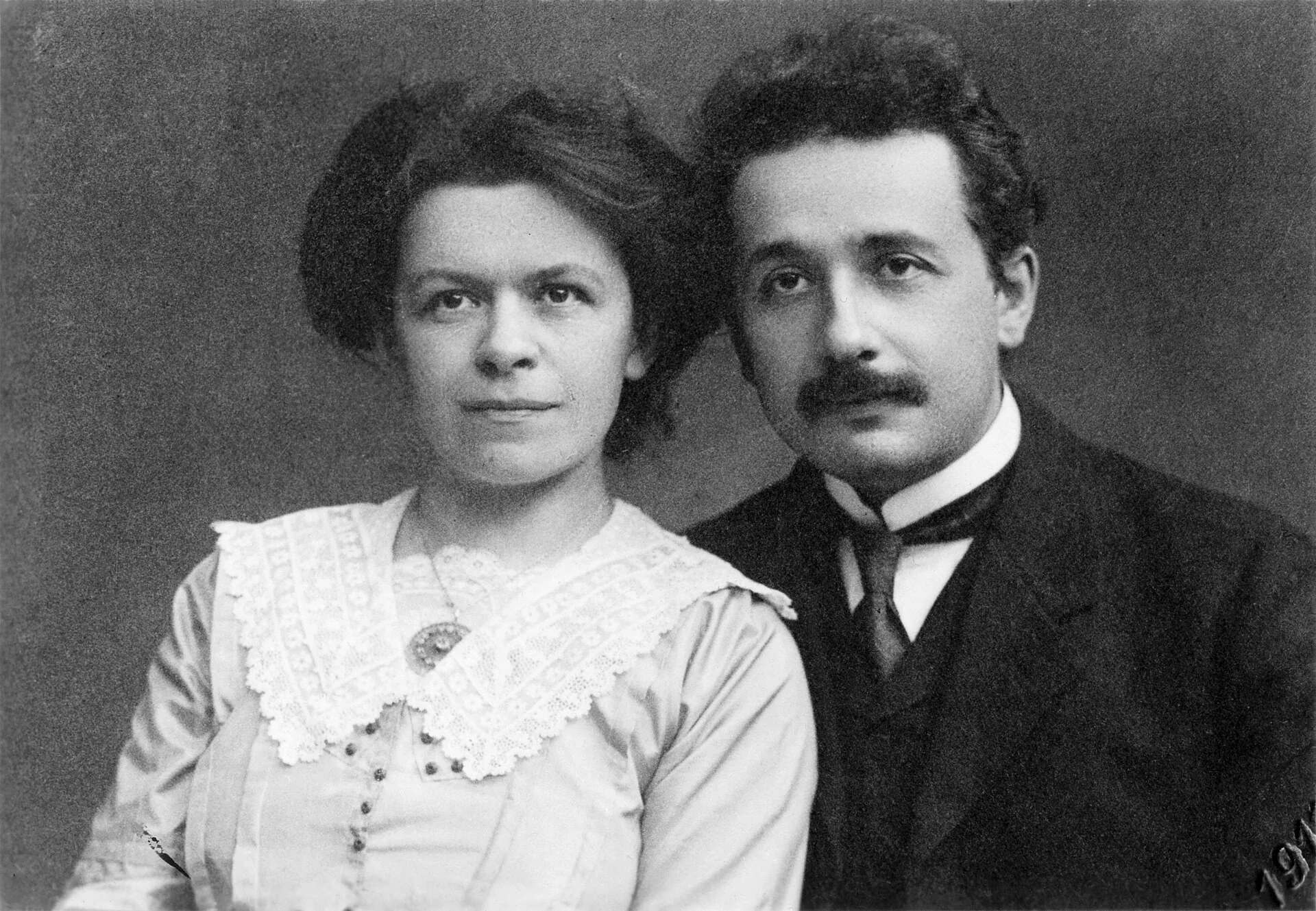
Image: Unknown author (ETH-Bibliothek Zürich). Public domain, via Wikimedia Commons (Source) -
1905
The Miracle Year
Four revolutionary papers — light quanta, Brownian motion, special relativity and E = mc² — plus his doctoral thesis (the degree follows in January 1906).
-
1909
First professorship
Einstein leaves the patent office for his first professorship, at the University of Zurich.
-
1914
Berlin
He moves to Berlin to take up his place at the Prussian Academy of Sciences (elected 1913); his marriage to Mileva breaks down.
-
1915
General relativity
After eight years of work, Einstein presents the field equations of general relativity.
Act III · 1915–1933
World Fame
An eclipse turns a physicist into the most famous person on Earth.
-
1919
Eclipse & fame
Eddington's eclipse expedition confirms light-bending. Einstein becomes a global celebrity, divorces Mileva and marries Elsa.
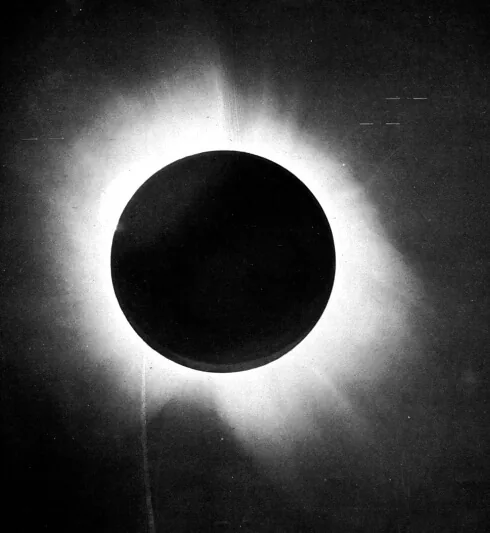
Image: F. W. Dyson, A. S. Eddington & C. Davidson. Public domain, via Wikimedia Commons (Source) -
1921
Nobel Prize
Awarded the 1921 Nobel Prize in Physics (announced 1922) for the photoelectric effect.
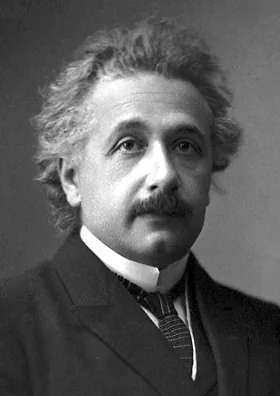
Image: Nobel Foundation (photo possibly Herman Mishkin). Public domain, via Wikimedia Commons (Source) -
1927
The great debate
At the Solvay Conference, Einstein and Niels Bohr begin their legendary clashes over quantum theory.
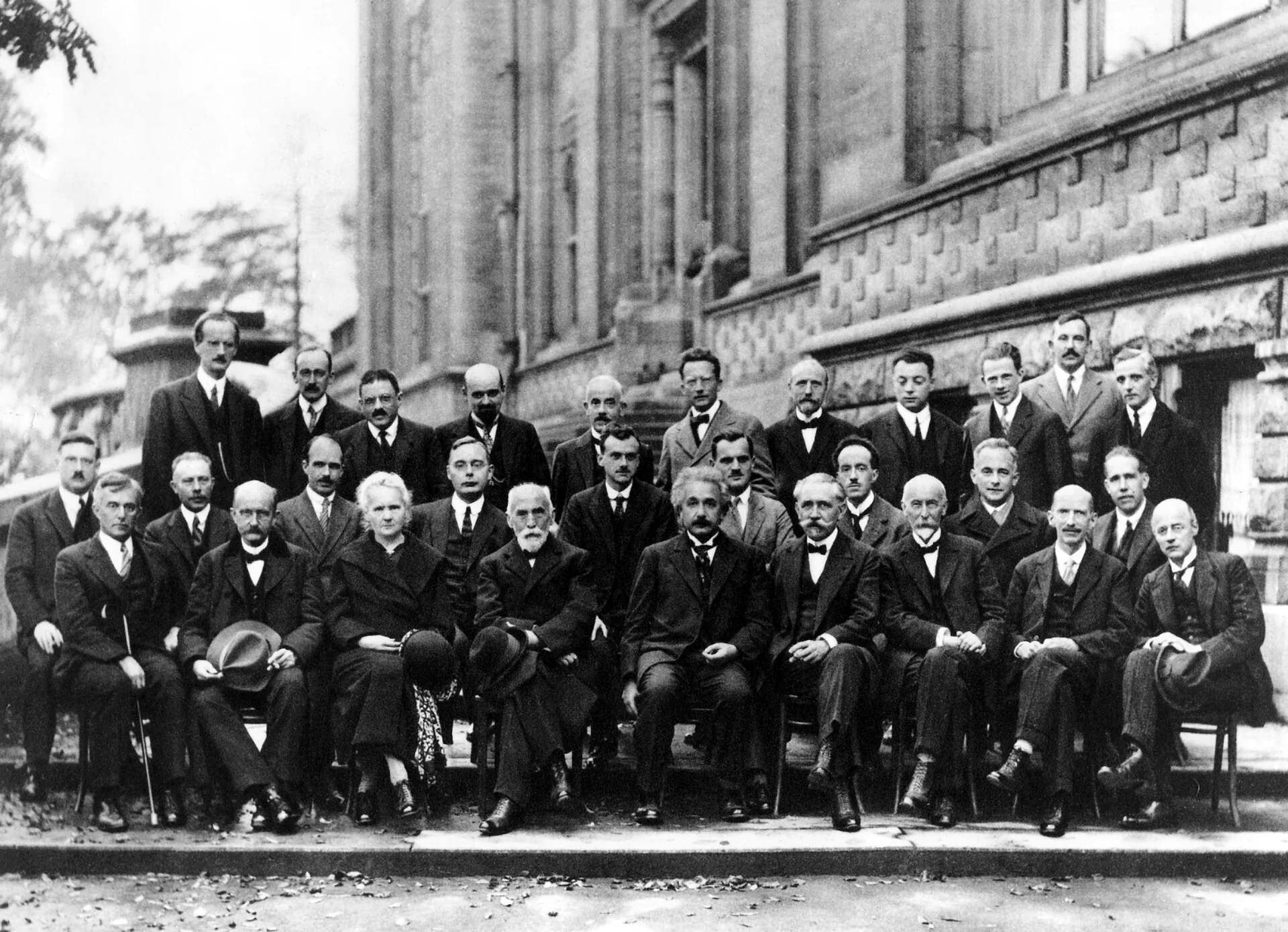
Image: Benjamin Couprie, Institut International de Physique Solvay. Public domain, via Wikimedia Commons (Source) -
1933
Exile
With Hitler in power, Einstein — then visiting the United States — decides never to return to Germany and renounces his German citizenship.
Act IV · 1933–1955
Exile & America
A new home in Princeton, a fateful letter, and a conscience that would not rest.
-
1933
Princeton
Einstein joins the Institute for Advanced Study in Princeton, New Jersey.
-
1935
EPR paradox
Einstein, Podolsky and Rosen challenge quantum mechanics — and unwittingly describe entanglement.
-
1939
Letter to Roosevelt
Einstein signs the Szilárd-drafted letter warning of a possible Nazi atomic bomb.
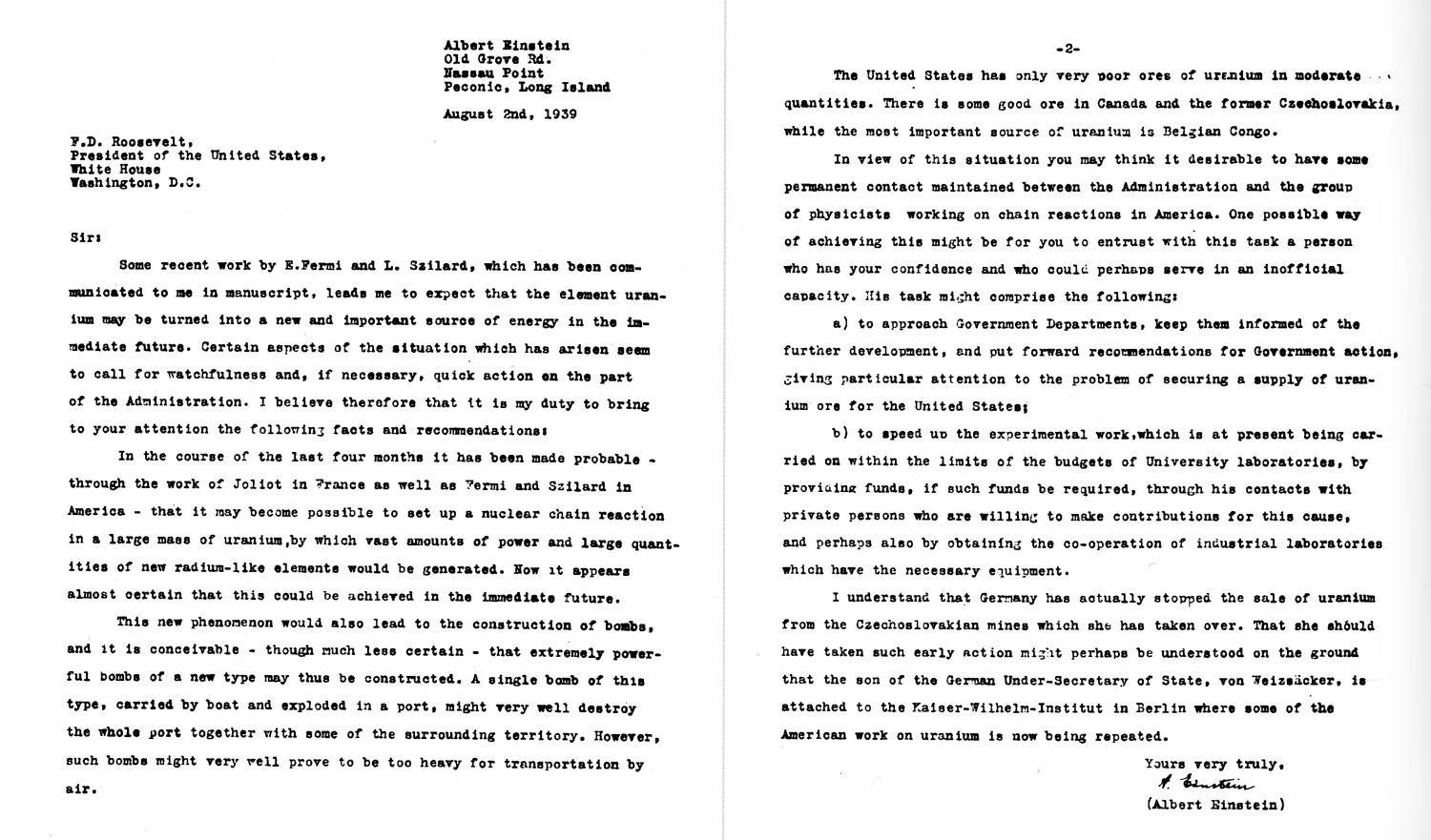
Image: Albert Einstein & Leó Szilárd (letter text). Public domain, via Wikimedia Commons (Source) -
1940
American citizen
He becomes a US citizen while keeping his Swiss citizenship.
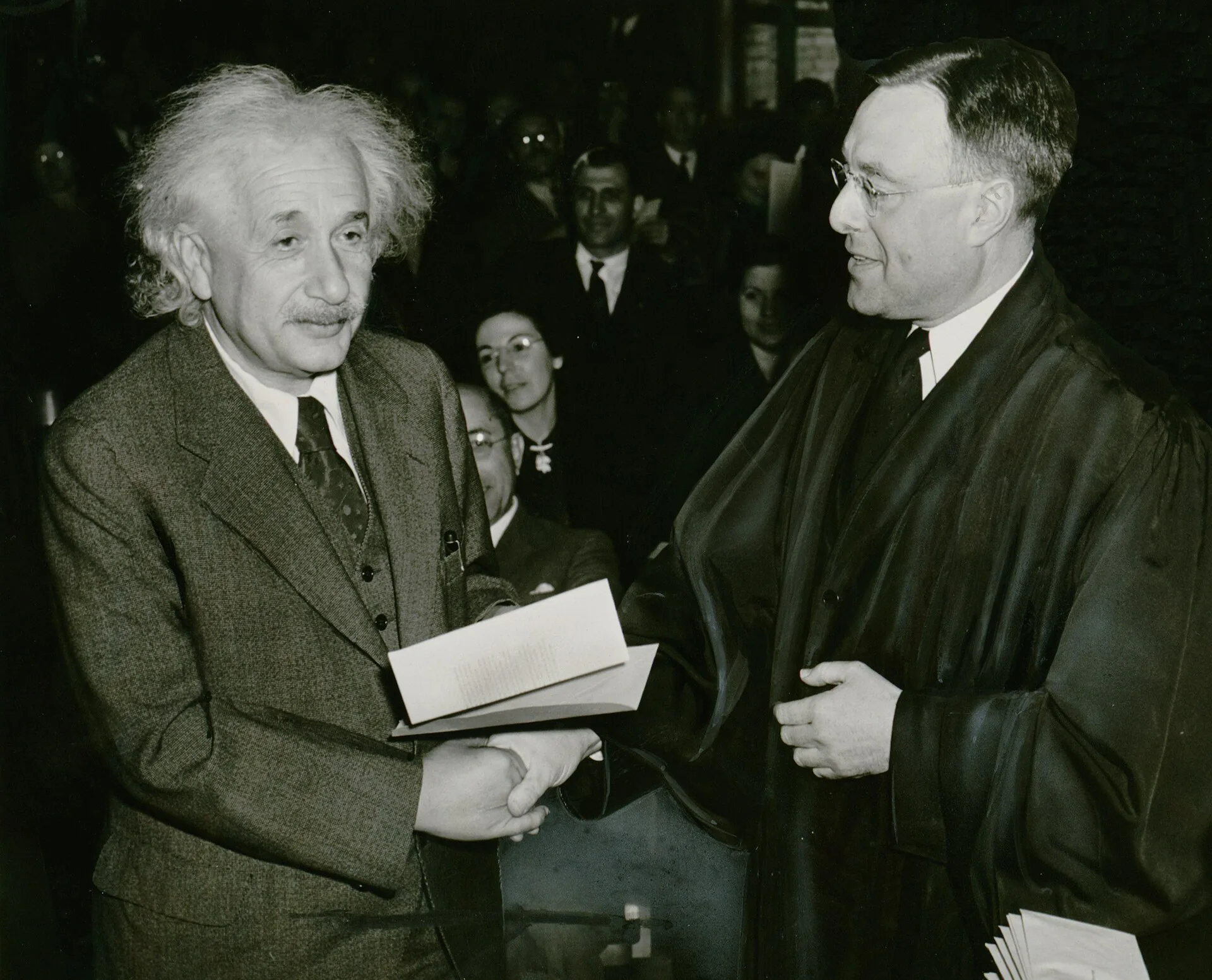
Image: Al Aumuller, New York World-Telegram & Sun. Public domain, via Wikimedia Commons (Source) -
1946
Civil rights
He speaks at Lincoln University, calling segregation “a disease of white people”.
-
1952
Declines Israel's presidency
Offered the presidency of Israel after Weizmann's death, Einstein respectfully declines.
-
1955
Manifesto & death
Days before his death on 18 April he signs the anti-nuclear Russell–Einstein Manifesto.
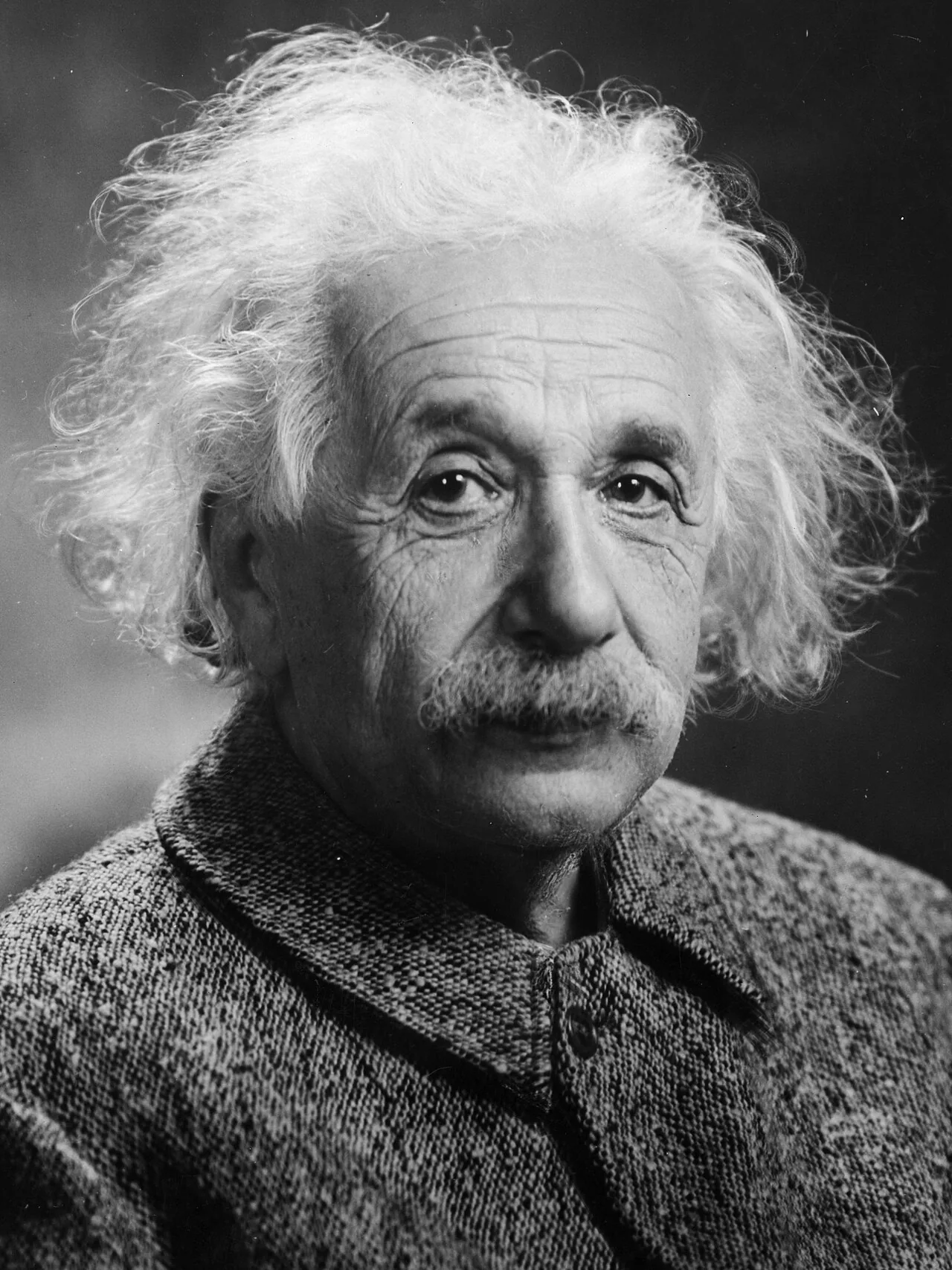
Image: Orren Jack Turner, Princeton, N.J.. Public domain, via Wikimedia Commons (Source)
Epilogue · since 1955
The Legacy Lives On
Decades after his death, his predictions keep coming true.
-
1999
Person of the Century
Time magazine names Einstein the most important person of the 20th century.
-
2015
Gravitational waves
LIGO detects gravitational waves — confirming a prediction Einstein made in 1916.
-
2019
A black hole, pictured
The Event Horizon Telescope releases the first image of a black hole, matching general relativity.
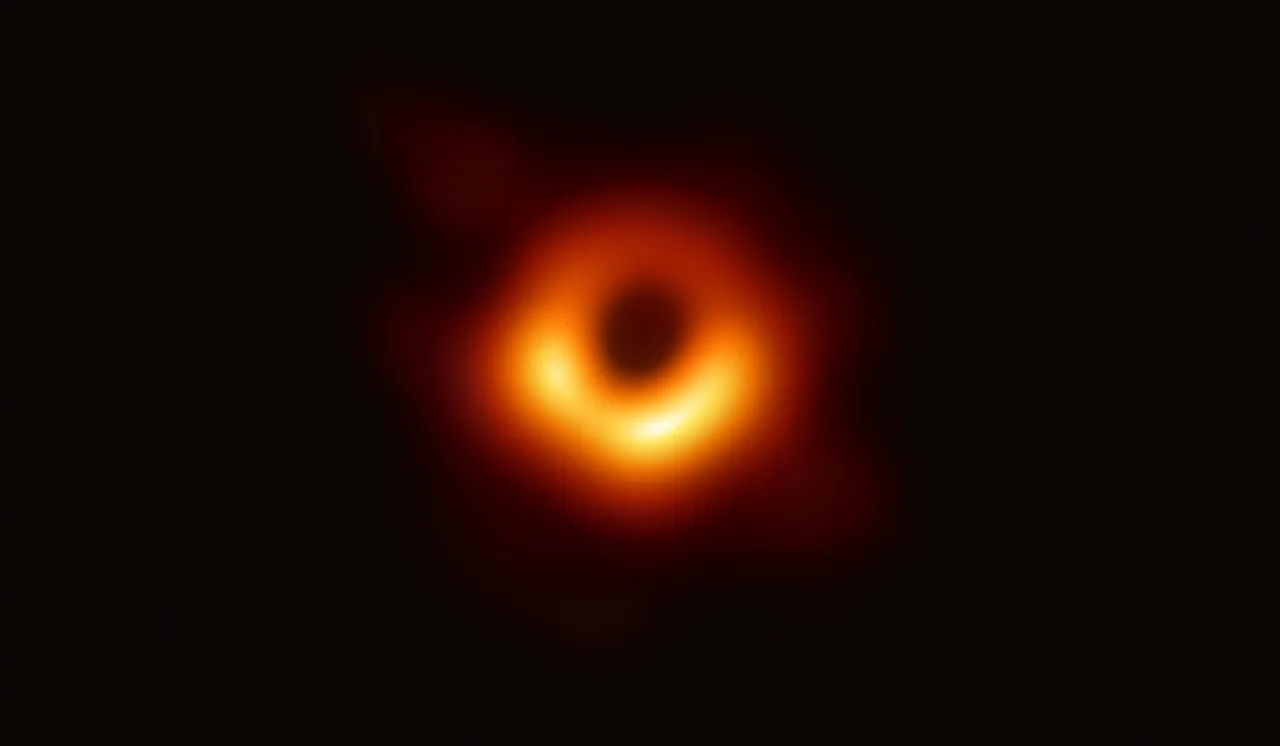
Image: Event Horizon Telescope Collaboration. CC BY 4.0, via Wikimedia Commons (Source)
- Wikipedia: Albert Einstein; history of general relativity; LIGO and Event Horizon Telescope press releases. Photographs: public domain, via Wikimedia Commons (full credits on the sources page).
And at your age?
At 26 Einstein wrote the papers of the miracle year; at 36 he completed general relativity. What was he doing at your age? Every age here is calculated from his date of birth, 14 March 1879, and the documented date of the event — to the day wherever the day is known.
- de.wikipedia: Albert Einstein · en.wikipedia: Albert Einstein
- en.wikipedia: Annus mirabilis papers · Annalen der Physik 17 (1905), S. 132–148 (Faksimile) · Annalen der Physik 17 (1905), S. 891–921 (Faksimile) · Annalen der Physik 35 (1911), S. 898–908 (Faksimile) · Instituut-Lorentz (Universität Leiden): Einstein in Leiden · en.wikipedia: Solvay Conference · en.wikipedia: Einstein–Szilard letter · en.wikipedia: EPR paradox · de.wikipedia: Russell-Einstein-Manifest · de.wikipedia: Einsteinhaus Caputh